
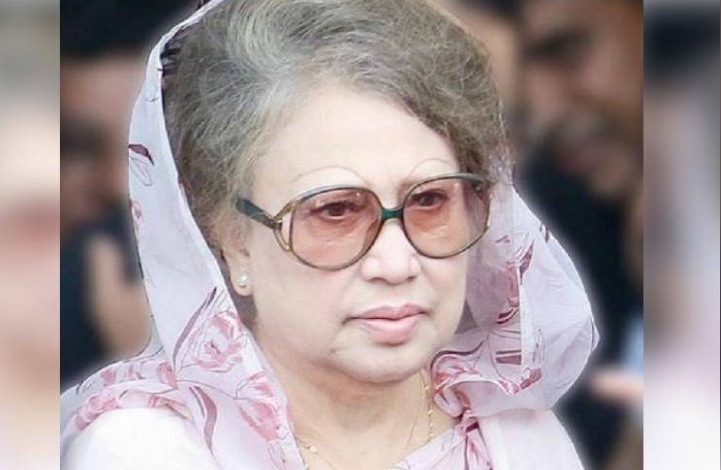
DHAKA – Khaleda Zia, the first female prime minister of Bangladesh, has passed away at the age of 80.
Her death occurred at Evercare Hospital in Dhaka on Tuesday at 6 AM local time, after a prolonged battle with various health conditions, including liver cirrhosis, arthritis, diabetes, and heart-related issues.
In an official statement, the Bangladesh Nationalist Party (BNP) expressed deep sorrow, calling Khaleda a beloved national leader. “Our beloved national leader is no longer with us,” the BNP said, requesting prayers for her soul.
Khaleda was admitted to the hospital on November 23 with a lung infection and had been in critical condition for some time. In her final days, the country’s interim leader, Muhammad Yunus, urged citizens to pray for her, describing her as a “source of utmost inspiration.”
Khaleda’s political journey was shaped by tragedy. She became a prominent political figure after her husband, Ziaur Rahman, was assassinated in 1981 during a failed military coup. At just 35 years old, Khaleda stepped into leadership, inheriting the reins of the BNP during a time of political turmoil. Her political influence grew as she served as prime minister from 1991 to 1996 and again from 2001 to 2006, becoming a central figure in Bangladesh’s political landscape.
Her career was marked by frequent rivalries, most notably with Sheikh Hasina, the leader of the Awami League. Khaleda faced corruption charges in 2018, which led to her imprisonment and a ban on traveling abroad for medical treatment. She was released in 2023 after the departure of Sheikh Hasina from office.
Khaleda’s passing marks the end of an era in Bangladesh’s political history. Her son, Tarique Rahman, who had been in self-imposed exile for 17 years, recently returned to Bangladesh and is set to lead the BNP in the upcoming February 2025 elections.