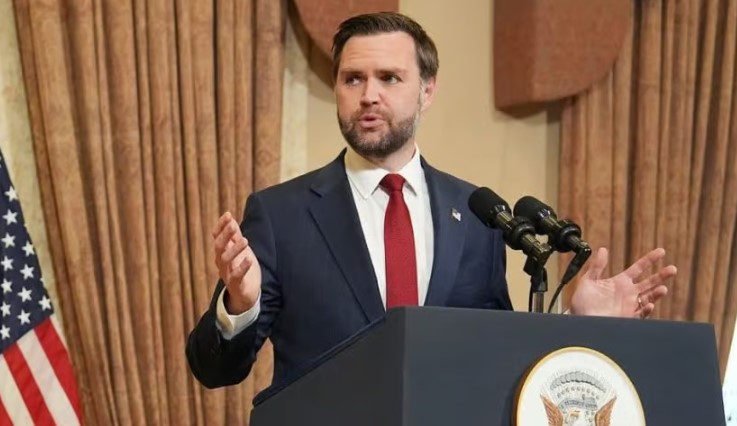
ISLAMABAD – US Vice President JD Vance’s visit to Pakistan has been suspended amid growing uncertainty over Iran’s participation in critical talks in Islamabad.
Vance was expected to depart for Islamabad early Tuesday morning. However, the trip was abruptly called off, and he instead remained in Washington for urgent policy-level meetings at the White House. The White House has confirmed the change in schedule but has not provided further explanation beyond ongoing internal consultations.
Tehran has still not confirmed whether it will send a delegation to the proposed negotiations with the United States in Islamabad, leaving the entire diplomatic process hanging in uncertainty. The lack of confirmation has effectively cast doubt over whether the talks will proceed at all.
The developments come at a time of intensifying geopolitical pressure, with US President Donald Trump issuing stark warnings that military action remains on the table if diplomacy fails. Trump has also signaled strong opposition to extending the current ceasefire agreement, which is set to expire on Wednesday—raising the stakes even further for all parties involved.
Earlier in the day, Trump adopted an even more forceful tone, insisting that Iran “has no choice” but to participate in the Islamabad talks. He expressed confidence that Washington is positioned to secure what he described as a “great deal,” while also claiming that the US had already effectively prevailed in the broader conflict.
In unusually blunt remarks, Trump suggested that without US military pressure, Iran would require decades to rebuild its capabilities. He also warned that failure to reach an agreement could lead to renewed military operations, stating that American forces are fully prepared and “ready to go,” with ample supplies and ammunition.
Reinforcing the urgency, Trump rejected any extension of the ceasefire and stressed that time is running out for diplomatic resolution. He argued that Iran is under significant pressure and has little option but to come to the negotiating table.
In a striking admission, Trump also acknowledged that recent US actions targeting Iranian leadership had effectively altered the political landscape, describing it in terms that implied “regime change,” though he insisted this was not the original intent.