
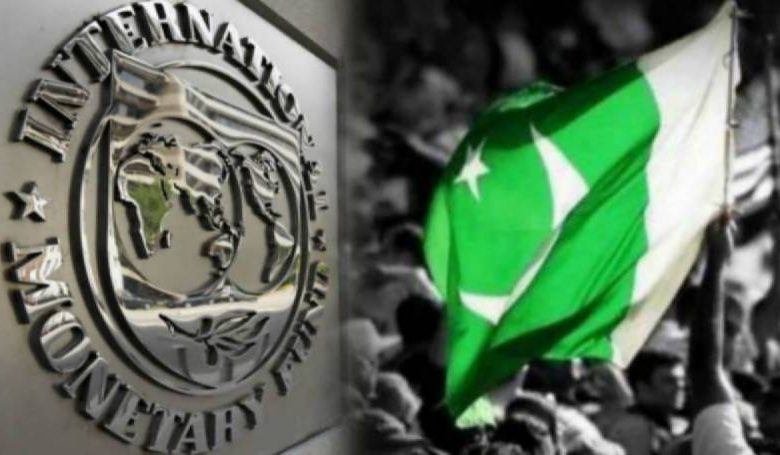
The International Monetary Fund’s (IMF) Executive Board has approved a $1.29 billion loan for Pakistan,
The approval follows a staff-level agreement reached in October between Pakistan and the IMF on the country’s ongoing loan programmes.
Under the $7 billion Extended Fund Facility (EFF) programme, Pakistan is set to receive more than $1 billion, according to sources. This includes the first tranche of over $200 million under the $1.3 billion Rapid Financing Instrument (RFI).
With the release of these funds, the total disbursement from both loan programmes will reach $3.3 billion, the sources added. Pakistan had already received two instalments under the EFF programme.
The IMF’s Executive Board has approved the second economic review, sources said.
The IMF has described the implementation of the ongoing loan programmes as “strong” and has assured the government of continued support for its economic reforms.
The release of $1.29 billion is expected to further bolster Pakistan’s foreign exchange reserves.
An IMF team, led by Iva Petrova, held discussions in Karachi and Islamabad from September 24 to October 8 and in Washington, DC, to finalise the SLA.
The IMF cited robust programme implementation and highlighted priorities, including sustaining fiscal discipline while supporting flood-affected households, maintaining inflation within the State Bank of Pakistan’s target range, restoring energy sector viability and advancing structural reforms.
The Fund had also noted progress on the RSF-backed climate agenda, emphasising that recent floods underscore the need for consistent, comprehensive reforms to mitigate climate risks.
Ahead of the Board meeting, the lender released its Governance and Corruption Diagnostic (GCD) report. The report has warned that persistent corruption and weak institutions continue to undermine the country’s economic development even as it stabilises under an EFF.
“Corruption is a persistent challenge in Pakistan, with significant adverse implications for economic development,” the report noted. It says indicators reflect weak control of corruption over time, with negative consequences for the effectiveness of public spending, revenue collection and trust in the legal system.
The report mentioned that Pakistanis are often compelled to make continuous payments to officials to obtain basic services, while funds lost to corruption could otherwise support higher production and development.
The report read that political and economic elites have obstructed economic development by seizing control of policies and capturing public benefits for their own gain.