
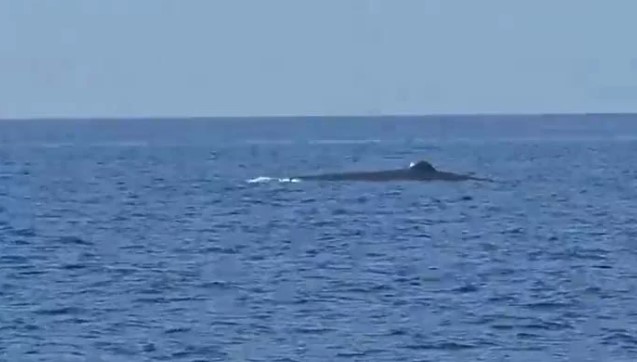
A sperm whale (Physeter macrocephalus) has been spotted along the Sindh coast for the first time, with the sighting recorded around 40 nautical miles southwest of Karachi, the World Wide Fund for Nature-Pakistan (WWF-P) said in a statement on Friday.
The whale, estimated to be around 45 feet long, was spotted during an expedition by Zahid Maker, a board member of WWF-Pakistan. The organisation said previous sightings of the species had been reported along the Balochistan coast.
Footage captured during the encounter showed the sperm whale’s characteristic blowhole, distinctive skin markings and prominent hump.
Commenting on the sighting, WWF-Pakistan Senior Director Rab Nawaz said the country’s waters supported diverse marine life, much of which remained poorly understood and documented. He said the sighting highlighted the ecological importance of offshore waters and the need to protect marine habitats and food chains.
“Pakistan’s waters support an extraordinary diversity of marine life, much of which remains poorly understood and documented. Sightings of large whales such as the sperm whale remind us of the ecological importance of our offshore waters and the need to protect the habitats and food chains that sustain these species. Safeguarding marine biodiversity requires stronger conservation measures, responsible fishing practices and collective action to reduce the pressures on marine ecosystems,” he said.
Sperm whales primarily feed on cephalopods, including squid and octopuses. Pakistan’s coastal and offshore waters support several species of squid, including purpleback flying squid and diamondback squid, which form part of the whale’s diet.
The species typically dives to depths of 300 to 800 metres and can reach depths of one to two kilometres in search of food.
WWF-Pakistan has documented 26 cetacean species in the country’s waters, including blue whales, Bryde’s whales, Arabian Sea humpback whales and several species of toothed whales and dolphins.
The organisation said threats to marine life include fishing gear entanglement, vessel strikes and marine pollution, highlighting the need for research, monitoring and conservation measures.