ISLAMABAD — Prime Minister Shehbaz Sharif has strongly pushed back against reports linking Iran’s ballistic missile program to a recent Pakistan-Iran memorandum of understanding, while delivering a sharp rebuke of what he called international double standards in the treatment of strategic defense capabilities.
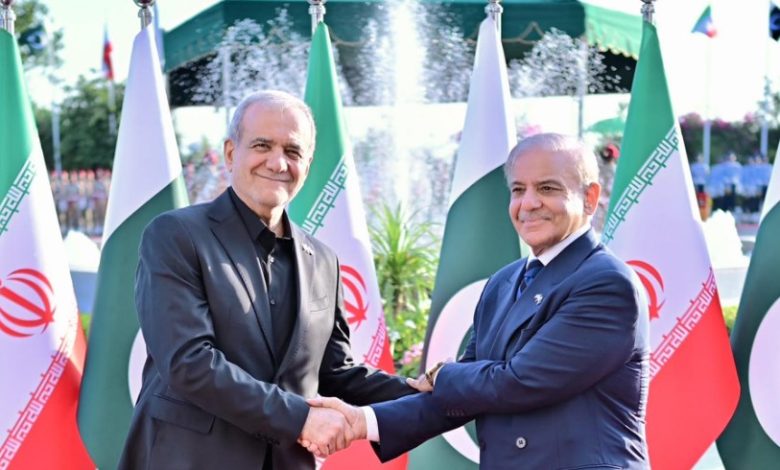
Speaking during high-level talks with Iranian President Masoud Pezeshkian, Sharif dismissed suggestions that Tehran’s missile program was part of any agreement reached between the two neighboring countries. The Pakistani premier instead used the occasion to question what he described as unequal global policies governing missile development and national security.
“It is unfair for some nations to possess ballistic missiles while denying the same right to others,” Sharif said, signaling Islamabad’s opposition to selective approaches toward defense and deterrence capabilities.
The remarks come at a particularly sensitive moment for the Middle East, with uncertainty surrounding potential diplomatic engagement between the United States and Iran and growing concerns over security in the Strait of Hormuz, one of the world’s most critical maritime chokepoints.
Sharif’s comments are likely to attract international attention as scrutiny of Iran’s missile arsenal remains a central issue in regional and global security discussions. By openly challenging what he characterized as hypocrisy in the treatment of missile programs, the prime minister underscored Pakistan’s position that strategic defense policies should be judged by consistent standards rather than geopolitical preferences.
During the meeting, Sharif also emphasized the depth of Pakistan-Iran relations, describing the two countries as “brothers” whose ties have strengthened through difficult times. He said the bond between Islamabad and Tehran remains enduring and resilient despite regional challenges.
The talks between Sharif and Pezeshkian highlighted continued coordination on rapidly evolving developments across the Middle East, with both sides closely monitoring shifting geopolitical realities.
As tensions continue to simmer across the region, Sharif’s forceful defense of equal treatment in strategic defense matters has added a significant new dimension to Pakistan’s diplomatic messaging, placing Islamabad firmly against what it views as selective and politically driven international security policies.