
OTTAWA – Canadian authorities rolled out some changes to international student system, creating a more streamlined route for eligible Master’s and PhD students, particularly those enrolling at public universities.
The biggest change is for PhD students as applying online from outside Canada may receive a study permit decision in as little as two weeks. The faster processing begins after required steps, including biometrics and verification of the student’s Letter of Acceptance, are completed. It is not a guaranteed two-week decision for every applicant.
No PAL/TAL for Eligible Graduate Students
From January 1, 2026, students admitted to eligible degree-granting Master’s and PhD programs at public Designated Learning Institutions (DLIs) no longer need a Provincial or Territorial Attestation Letter (PAL/TAL).
The exemption applies to qualifying degree programs, not all postgraduate courses. Students planning to study in Quebec generally still require a Certificat d’acceptation du Québec (CAQ).
Family and Work Opportunities
Eligible graduate students can bring their spouse or common-law partner and dependent children. Under current rules, spouses of students in qualifying Master’s and doctoral programs may also be eligible for an open work permit.
After graduation, eligible students may qualify for a Post-Graduation Work Permit (PGWP). Certain qualifying Master’s programs of at least eight months can lead to a three-year PGWP, subject to current eligibility requirements.
The changes come as Canada continues to reduce its overall international-student intake. Government data shows study-permit holders fell from more than 1 million in January 2024 to about 725,000 by September 2025.
For 2026, Canada expects to issue up to 408,000 study permits, including 49,000 permits for Master’s and doctoral students at public DLIs, who are among the groups exempt from the PAL/TAL requirement.
The new rules do not guarantee approval. Applicants must still provide a valid Letter of Acceptance, proof of funds, passport and biometrics where required, and satisfy Canada’s medical, security and other admissibility requirements.
For applications submitted from September 1, 2026, a single student outside Quebec must show CAD $23,448 for annual living expenses, in addition to tuition and transportation costs. The amount rises with accompanying family members.
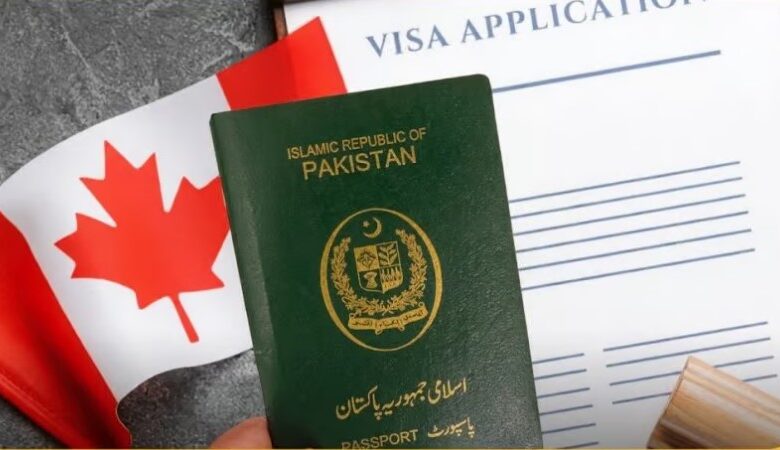
For Pakistani students targeting Canadian graduate education, the most significant changes are clear: eligible public-university Master’s and PhD programs are exempt from PAL/TAL requirements, while eligible overseas PhD applicants can access faster processing of around two weeks once preliminary checks are complete.